How to Do the Step Up Banner Again
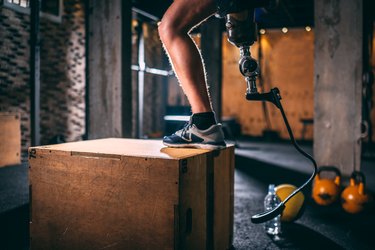
The pace-up do is one of the best leg exercises for the glutes, quads and hamstrings.
Paradigm Credit: EXTREME-Lensman/E+/GettyImages
The stride-up exercise is a seemingly apprehensive exercise: Climb a step, then come dorsum down. Only that simple movement has effectiveness superpowers. It fires up the glutes and legs in a style that rivals (and sometimes, even surpasses!) archetype lower-body moves similar squats and lunges.
- What is a step-up? A unilateral, or single-leg, exercise that involves placing one leg on a step or bench, then pressing through that leg to bring your other foot up to run across the lead one.
- What muscles practice pace-ups work? The primary step-upwards practice muscles worked are your quadriceps, glutes and hamstrings. Other muscles get involved as stabilizers, merely the big leg muscles do the about piece of work. Your core muscles proceed you steady.
- What can I use for step-ups at home? A staircase! You don't need a bench or aerobic footstep to do step-up at home. Live in a single-level home? A sturdy chair can piece of work, besides. (But make certain that yous're stepping into the middle of the seat, and not the border, to keep the chair balanced.)
Here's everything you need to know near what step-ups are good for, how to do them properly and variations to add to your routine.
How to Do the Step-Upwardly Exercise With Proper Form
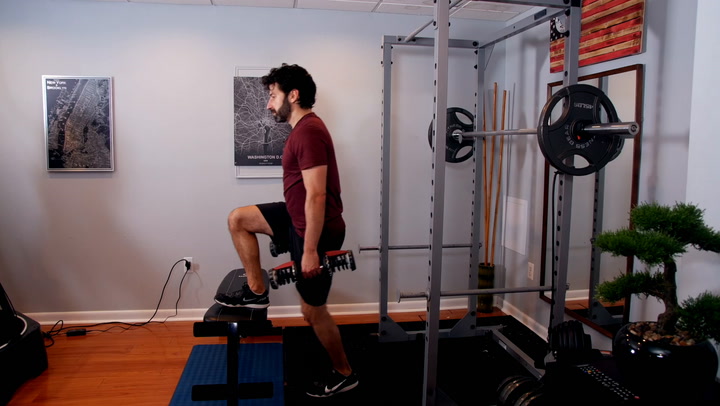
Body Office Legs, Butt and Abs
- Stand up holding dumbbells at your sides, palms facing in. Place your left foot up on a step, bench or box so that your left knee is bent round 90 degrees.
- Pull your shoulders back and down equally if yous were trying to tuck your shoulder blades into the back pocket of a pair of jeans. Make full your chest with air to set your core, and maintain a tight, rigid core throughout the motility.
- Bring the weights forrard slightly past leaning your trunk forward only a chip. This volition keep the weight in your forepart, working leg.
- Printing through the heel of your raised human foot and push your body up until your left leg is straight. Practise non bring your right foot onto the bench until it is even with your left foot.
- Command your body every bit you lower your correct foot back to the floor and return to the starting position. Complete all your repetitions on this side, then switch sides and repeat.
How Many Footstep-Ups Should I Do?
The all-time number of reps and sets to practice depends on your fitness goals. If you lot're working to build muscle endurance, y'all might exist able to crank out 15 or so reps, and do 2 to 3 sets. If you're working for strength and muscle gains, try using a moderately heavy weight and aim for half dozen to 12 reps and 2 to half-dozen sets. If you're going actually heavy, try to do 6 or fewer reps and 2 to 6 sets.
Sentinel the Full Tutorial
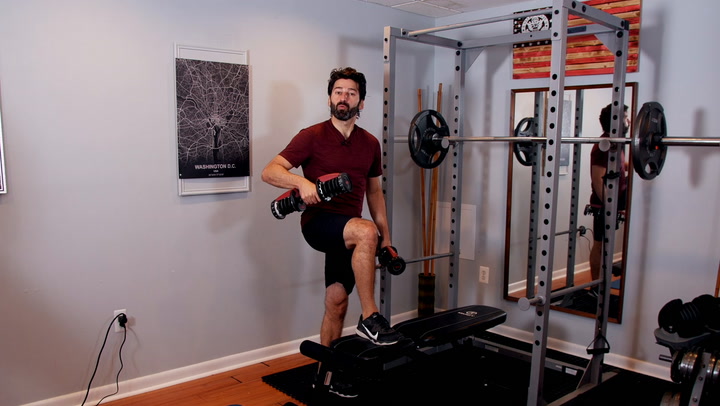
Stride-Upward Practice Benefits and Muscles Worked
i. It Builds Glute Force (Better Than Squats)
Your glutes include three muscles — the gluteus maximus, gluteus medius, and gluteus minimus — and this exercise hammer them all. In fact, in a June 2020 study in the Journal of Strength and Conditioning Enquiry, stride-ups were better at working the maximus and medius better than regular squats.
The maximus is the largest glute muscle, while the medius (also chosen the glute med) is the critical side-glute musculus that stabilizes your hips and knees when you lot practice forrard movements like walk, run and bike.
2. It Rocks Your Hamstrings (Ameliorate Than Squats)
Your hamstrings — a group of 4 muscles that run down the back of your thighs — play a part in nigh lower-body movements. They make it possible for yous to move your knees and hips and rotate your thighs. And they work with the glutes to give you awesome lower-body strength.
Turns out, stepping upwardly and back downwards is a great way to target this area. The above Journal of Force and Conditioning Enquiry likewise establish that the exercise works the biceps femoris — one of the master hammies — harder than regular, two-legged squats.
three. It Makes Climbing Stairs a Cakewalk
Stronger quads, here you come! When your knee straightens against resistance (from gravity and the weight y'all're holding) your quadriceps in the front end of your thighs fire. This makes it an fantabulous move for working and building the quads — and helping y'all more than easily climb stairs.
Want to claiming your quads fifty-fifty more? The college the step you lot tackle, the harder your quads will have to work to straighten your knee.
four. It Requires Minimal (if Any!) Weight
One of the big benefits of any unmarried-leg do is that y'all need less weight to challenge your muscle. Get this: Because you're using i leg at a fourth dimension, stepping up without any weights is similar to performing a 2-legged exercise holding your unabridged trunk weight in dumbbells.
So if yous're working out at home or don't have access to heavy weights, don't worry. You can still requite your muscles a big challenge. Bonus: Unmarried-leg moves require your core to work hard to keep you lot stable, then you'll be getting a sneaky core workout as you lot footstep.
5 Grade Tips for Better Results
1. Get the Correct Knee Bending
Choose a step or bench that allows your knee to be bent 90 degrees and at hip height, or even a little higher.
"You desire to feel a stretch in the dorsum portion of the hamstrings and the inner portion of the groin before the execution starts," Brandon Lirio, CPT, a certified personal trainer, managing director of BattleGround Fitness and a professional bodybuilder, tells LIVESTRONG.com.
If your knee is too depression, the movement will me more similar to a quarter-squat than a total squat, and you'll be more probable to button upward with your non-working foot to get the movement going.
That said, this is only if you notice this setup comfortable. If a high bench or step feels uncomfortable on your human knee, go ahead and work with a lower surface. Over fourth dimension, you lot may exist able to use higher and higher steps. If non, that'south however cool.
2. Don't Apply Your Dorsum Leg
During this exercise, many people don't feel a ton of piece of work in their raised leg considering they spring off the not-working leg. Avoid this by focusing on your tiptop leg, keeping your body weight out of your back leg and lowering slowly and only until your toes touch the floor.
3. Shift Your Weight Slightly Forward
When you place your foot up on the stride or demote, the muscles that you desire to work are at present near a foot in front end of the weight you're lifting — the weight being your bodyweight or your trunk plus a dumbbell or kettlebell. If yous were to step up perfectly direct in this position, the weight will still exist behind your working foot, and you're likely to just topple back down, Lirio says.
Instead, lean your trunk and the weights slightly forrad earlier each rep. This fashion, the weight will become upward and downward in what's closer to a direct up-and-downwards motion. This will also help keep you from pushing off with the back, non-working leg, and brand sure the raised leg is doing all the work.
iv. Lower Slowly
Y'all might be tempted to only focus on the stepping up part of the motion, simply you lot want to also exist mindful of how you stride down. Slamming back down onto your not-working pes and ankle isn't going to feel so adept, and there'due south no reason to subject yourself to all that touch on — even if it doesn't injure in the moment, your joints won't like it in the long term.
Avoid dropping onto your non-working leg by lowering your trunk in a slow and controlled motion.
v. Practice All Reps, And then Switch Legs
As with any exercise, it'southward important to nail proper form before progressing it (adding more than weight or a college step). Doing all of your reps on ane side and then switching to the other leg ways you lot don't take to reset after every unmarried rep, making it easier to go along your course locked in. (It too means a lot less coordination is required!)
You'll likewise keep the muscles nether tension for longer, which translates to more than gains.
The 3 All-time Variations
Mix things upwards — or even build an unabridged footstep-up box workout — with these must-try variations.
Motility 1: Body-Weight
This is an ideal stride-up exercise for beginners — or anyone who wants to strengthen upwardly without equipment.
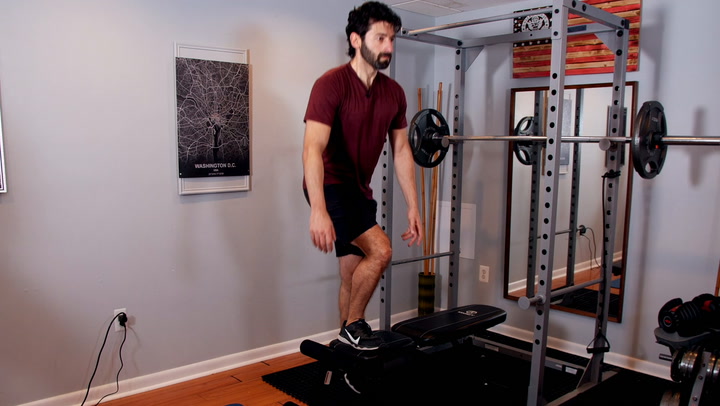
Activity Body-Weight Conditioning
- Place your left human foot upward on a step, bench or box so that your left knee is bent virtually xc degrees.
- Pull your shoulders back and downwardly every bit if you were trying to tuck your shoulder blades into the dorsum pocket of a pair of jeans. Fill your breast with air to prepare your cadre, and maintain a tight, rigid cadre throughout the movement.
- Lean your trunk forward just a bit. This will keep the weight in your forepart, working leg.
- Press through the heel of your raised, left pes and push button your body upwards until your left leg is straight. Do non bring your right foot onto the bench until it is even with your left foot.
- Control your body equally y'all lower your correct human foot dorsum to the floor and return to the starting position. Complete all your repetitions on this side, then switch sides and repeat.
Move 2: Kettlebell Goblet
This variations works your quads even harder!
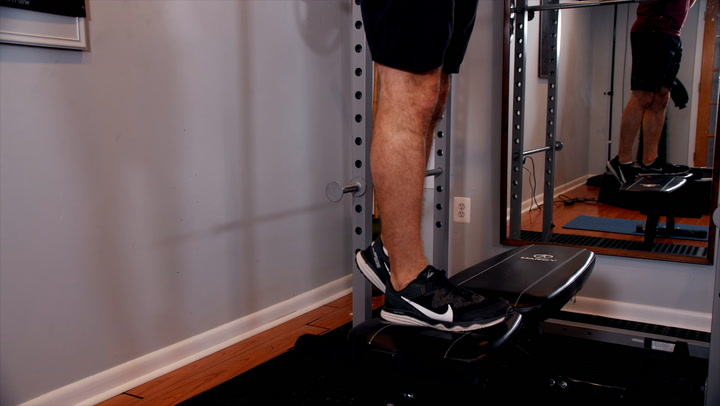
Activeness Kettlebell Workout
- Stand up holding a dumbbell in forepart of your chest vertically. Your hands should loving cup the head of a dumbbell, like you're holding a goblet. Place your left foot up on a step, bench or box so that your left knee is bent about degrees.
- Fill your chest with air to set your core, and maintain a tight, rigid core throughout the move.
- Bring the weight forward slightly by leaning your torso frontwards just a chip. This will keep the weight in your front, working leg.
- Press through the heel of your raised, left foot and push button your body up until your left leg is straight. Do not bring your right foot onto the bench until it is even with your left foot.
- Control your trunk every bit yous lower your right foot back to the floor and return to the starting position. Complete all your repetitions on this side, and so switch sides and repeat.
Tip
Lean your body slightly forward to go along the kettlebell stacked straight over your atomic number 82 pes'south heel. This will make it easier to heighten up. Just make sure to go along your back apartment (no arching or rounding!).
Motion three: Lateral
The lateral step-upward engages the glute medius, the muscle on the side of the barrel that is crucial for stabilizing the leg when you do lower-body movements. It too plays a major role in hip abduction, which happens when you elevator the leg out to the side and away from your trunk.
The movement is ane of the very all-time exercises for targeting this important hip muscle, per a December 2020 International Journal of Sports Concrete Therapy study.
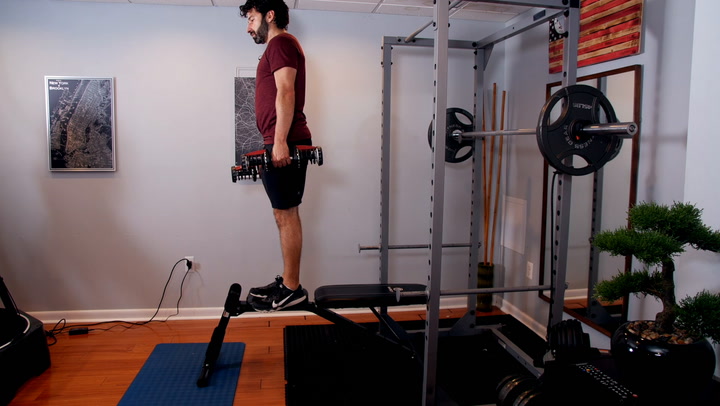
Activity Dumbbell Conditioning
- Stand with your left side next to a step, demote or box, belongings belongings dumbbells at your sides at arm's length, palms facing in. Identify your left pes upwardly on the pace so that your left knee is bent most 90 degrees.
- Pull your shoulders back and down every bit if yous were trying to constrict your shoulder blades into the back pocket of a pair of jeans. Make full your chest with air to set your cadre, and maintain a tight, rigid core throughout the motility.
- Push button your trunk up, pressing through through the heel of your raised, left foot and push button your torso upwards until your left leg is straight and your right foot is at the same level as your left foot.
- Command your body equally you lower your right pes dorsum to the flooring and return to the starting position. Complete all your repetitions on this side, then switch sides and repeat.
More of the All-time Leg Exercises
Source: https://www.livestrong.com/article/13769454-step-up-exercise/
0 Response to "How to Do the Step Up Banner Again"
Postar um comentário