Whites and Black Children Cartoon Try Try Again
The brute extravaganza portrays blackness men every bit innately roughshod, animalistic, subversive, and criminal -- deserving penalty, maybe death. This brute is a fiend, a sociopath, an anti-social menace. Blackness brutes are depicted every bit hideous, terrifying predators who target helpless victims, particularly white women. Charles H. Smith (1893), writing in the 1890s, claimed, "A bad negro is the well-nigh horrible beast upon the earth, the most cruel and merciless"(p. 181). Clifton R. Breckinridge (1900), a contemporary of Smith's, said of the black race, "when it produces a brute, he is the worst and most insatiate brute that exists in homo form" (p. 174).
George T. Winston (1901), another "Negrophobic" author, claimed:
When a knock is heard at the door [a White woman] shudders with nameless horror. The blackness fauna is lurking in the dark, a monstrous animate being, crazed with lust. His ferocity is nigh demoniacal. A mad bull or tiger could scarcely be more brutal. A whole customs is frenzied with horror, with the bullheaded and furious rage for vengeance.(pp. 108-109)
During slavery the dominant caricatures of blacks -- Mammy, Coon, Tom, and picaninny -- portrayed them as artless, ignorant, docile, groveling, and generally harmless. These portrayals were pragmatic and instrumental. Proponents of slavery created and promoted images of blacks that justified slavery and soothed white consciences. If slaves were childlike, for example, then a paternalistic institution where masters acted every bit quasi-parents to their slaves was humane, even morally correct. More importantly, slaves were rarely depicted equally brutes because that portrayal might take get a self-fulfilling prophecy.
During the Radical Reconstruction period (1867-1877), many white writers argued that without slavery -- which supposedly suppressed their animalistic tendencies -- blacks were reverting to criminal savagery. The conventionalities that the newly-emancipated blacks were a "black peril" continued into the early on 1900s. Writers like the novelist Thomas Nelson Page (1904) lamented that the slavery-era "good erstwhile darkies" had been replaced by the "new issue" (blacks born after slavery) whom he described equally "lazy, thriftless, intemperate, insolent, dishonest, and without the most rudimentary elements of morality" (pp. lxxx, 163). Page, who helped popularize the images of cheerful and devoted Mammies and Sambos in his early books, became ane of the kickoff writers to introduce a literary blackness brute. In 1898 he published Scarlet Rock, a Reconstruction novel, with the heinous figure of Moses, a loathsome and sinister black politician. Moses tried to rape a white adult female: "He gave a snarl of rage and sprang at her like a wild beast" (pp. 356-358). He was subsequently lynched for "a terrible offense."
The "terrible law-breaking" well-nigh often mentioned in connectedness with the blackness brute was rape, specifically the rape of a white adult female. At the beginning of the twentieth century, much of the virulent, anti-black propaganda that constitute its style into scientific journals, local newspapers, and acknowledged novels focused on the stereotype of the blackness rapist. The claim that blackness brutes were, in epidemic numbers, raping white women became the public rationalization for the lynching of blacks.
The lynching of blacks was relatively mutual between Reconstruction and World War II. Co-ordinate to Tuskegee Institute data, from 1882 to 1951 4,730 people were lynched in the United states of america: 3,437 black and i,293 white (Gibson, n.d.). Many of the white lynching victims were foreigners or belonged to oppressed groups, for example, Mormons, Shakers, and Catholics. By the early 1900s lynching had a incomparably racial character: white mobs lynched blacks. Almost ninety percentage of the lynchings of blacks occurred in southern or edge states.
Many of these victims were ritualistically tortured. In 1904, Luther Holbert and his wife were burned to death. They were "tied to trees and while the funeral pyres were being prepared, they were forced to agree out their easily while one finger at a time was chopped off. The fingers were distributed as souvenirs. The ears...were cut off. Holbert was browbeaten severely, his skull fractured and ane of his optics, knocked out with a stick, hung by a shred from the socket." Members of the mob and so speared the victims with a big corkscrew, "the spirals fierce out big pieces of...flesh every fourth dimension it was withdrawn" (Holden-Smith, 1996, p. 1).
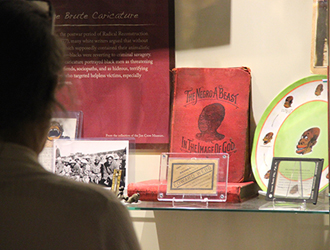
A mob lynching was a fell and savage upshot, and it necessitated that the lynching victim exist seen as as savage and fell; as these lynchings became more common and more cruel, so did the assassination of the black character. In 1900, Charles Carroll's The Negro A Beast claimed that blacks were more alike to apes than to human beings, and theorized that blacks had been the "tempters of Eve." Carroll said that mulattoi brutes were the rapists and murderers of his time (pp. 167, 191, 290-202). Dr. William Howard, writing in the respectable journal Medicine in 1903, claimed that "the attacks on defenseless White women are evidence of racial instincts" (in blacks), and the blackness birthright was "sexual madness and excess" (Fredrickson, 1971, p. 279). Thomas Dixon'due south The Leopard'due south Spots, a 1902 novel, claimed that emancipation had transformed blacks from "a chattel to exist bought and sold into a creature to be feared and guarded" (Fredrickson, p. 280).
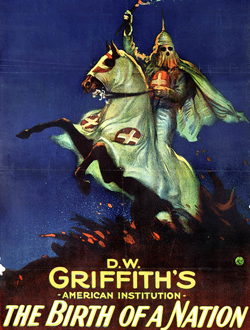
In 1905 Dixon published his almost popular novel, The Clansman. In this book he described blacks equally "half child, half brute, the sport of impulse, whim, and conceit...a being who, left to his will, roams at nighttime and sleeps in the twenty-four hours, whose voice communication knows no discussion of love, whose passions, once aroused, are as the fury of the tiger" (Fredrickson, 1971, pp. 280-281). The Clansman includes a detailed and gory account of the rape of a young white virgin by a black brute. "A unmarried tiger springs, and the black claws of the brute sank into the soft white throat." After the rape, the girl and her mother both commit suicide, and the black brute is lynched by the Ku Klux Klan. This volume served every bit the ground for the movie The Nascency of a Nation (Griffith, 1915), which as well portrayed some blacks as rapist-beasts, justified the lynching of blacks, and glorified the Ku Klux Klan. Carroll, Howard, and Dixon did not exceed the prevailing racism of the so-called Progressive Era.
In 1921-22 the U.s. House of Representatives and Senate debated the Dyer Bill, an anti-lynching bill. This bill provided fines and imprisonment for persons bedevilled of lynching in federal courts, and fines and penalties confronting states, counties, and cities which failed to use reasonable try to protect citizens from lynch mobs. The Dyer Beak passed in the House of Representatives, but it was killed in the Senate past filibustering southerners who claimed that it was unconstitutional and an infringement upon states' rights (Gibson, n.d., p. five). The following statements made by southern Congressmen during the Dyer Bill debate propose that they were more concerned with white supremacy and the oppression of blacks than they were with constitutional issues.
Senator James Buchanan of Texas claimed that in "the Southern States and in surreptitious meetings of the Negro race [white liberals] preach the damnable doctrine of social equality which excites the criminal sensualities of the criminal element of the Negro race and directly incites the diabolical crime of rape upon the white women. Lynching follows equally swift equally lightning, and all the statutes of State and Nation cannot stop it." (Holden-Smith, 1996, p. 14)
Representative Percy Quin of Mississippi, spoke of lynch law, "Whenever an infamous outrage is committed upon a [Southern] White woman the law is enforced by the neighbors of the woman who has been outraged? The colored people of [the Southward] realize the manner of that enforcement, and that is the one method past which the horrible criminal offence of rape has been held down where the Negro element is in a large majority. The man who believes that the Negro race is all bad is mistaken. But you must recollect that there is an element of barbarism in the black homo, and the people around where he lives recognize that fact." (Holden-Smith, 1996, p. 15)
Representative Sisson of Mississippi said, "as long every bit rape continues lynching volition continue. For this crime, and this crime lonely, the Southward has non hesitated to administer swift and certain punishment....Nosotros are going to protect our girls and womenfolk from these black brutes. When these blackness fiends keep their hands off the throats of the women of the South then lynching volition stop..." (Holden-Smith, 1996, p. 16)
Representative Benjamin Tillman from Southward Carolina claimed that the Dyer Nib would eliminate the states and "substitute for the starry banner of the Republic, a blackness flag of tyrannical centralized government...blackness as the face and centre of the rapist...who [recently] deflowered and killed Margaret Lear," a White girl in South Carolina. (Holden-Smith, 1996, p. 14) Tillman asked why anyone should intendance about the "burning of an occasional ravisher," when the House had more important concerns. (Holden-Smith, 1996, p. sixteen)
Senator T.H. Caraway of Arkansas claimed that the NAACP, "wrote this bill and handed it to the proponents of it. These people had but i idea in view, and that was to make rape permissible, and to allow the guilty to go unpunished if that rape should be committed past a Negro against a white woman in the South." (Holden-Smith, 1996, p. xvi)
Despite the hyperbolic claims of those Congressmen, most of the blacks lynched had not been defendant of rape or attempted rape. According to the Tuskegee Institute's lynching data, the accusations against lynching victims for the years 1882 to 1951 were: 41 percent for felonious assault, xix.2 percent for rape, vi.1 percent for attempted rape, iv.ix pct for robbery and theft, 1.8 percent for insulting white people, and 27 percent for miscellaneous offenses (for example, trying to vote, testifying against a white man, request a white woman to marry) or no offenses at all (Gibson, northward.d., p. 3). The 25.three% who were accused of rape or attempted rape were often not guilty, and were killed without benefit of trial. Gunnar Myrdal (1944), a Swedish social scientist who studied American race relations, stated:
At that place is much reason to believe that this effigy [25.3 percentage] has been inflated by the fact that a mob which makes the accusation of rape is secure from any further investigation; past the broad Southern definition of rape to include all sexual relations between Negro men and white women; and past the psychopathic fears of white women in their contacts with Negro men. (pp. 561-562)
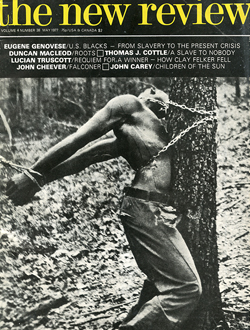
Lynchings oft involved castration, amputation of easily and feet, spearing with long nails and sharpened steel rods, removal of eyes, chirapsia with blunt instruments, shooting with bullets, burning at the stake, and hanging. It was, when washed by southern mobs, especially sadistic, irrespective of the criminal charge. Most white southerners agreed that lynching was evil, just they claimed that black brutes were a greater evil.
Lynchings were necessary, argued many whites, to preserve the racial purity of the white race, more specifically, the racial purity of white women. White men had sexual relations -- consensual and rape -- with black women every bit soon equally Africans were introduced into the European American colonies. These sexual unions produced numerous mixed-race offspring. White women, as "keepers of white racial purity," were not immune consensual sexual relations with black men. A blackness man risked his life by having sexual relations with a white woman. Even talking to a white woman in a "familiar" manner could result in black males beingness killed.
In 1955, Emmett Till, a black xiv year old from Chicago, visited his relatives in Mississippi. The exact details are not known, but Till apparently referred to a female white shop clerk as "Baby." Several days later, the woman's husband and blood brother took Till from his uncle'south home, crush him to death -- his head was crushed and one eye was gouged out--and threw his torso into the Tallahatchie River. The men were caught, tried, and constitute innocent by an all-white jury. The case became a cause celebre during the civil rights movement, showing the nation that fell violence undergirded Jim Crow laws and etiquette.
There were black rapists with white victims, but they were relatively rare; most white rape victims were raped by white men. The animate being extravaganza was a red herring, a myth used to justify lynching, which in turn was used as a social control machinery to instill fear in black communities. Each lynching sent messages to blacks: Practice not annals to vote. Do not apply for a white human'south chore. Practise not mutter publicly. Do not organize. Do not talk to white women. The brute caricature gained in popularity whenever blacks pushed for social equality. According to Allen D. Grimshaw (1969), a sociologist, the most savage oppression of blacks by whites, whether expressed in rural lynchings or urban race riots, has taken identify when blacks accept refused or been perceived by whites every bit refusing to accept a subordinate or oppressed status (pp. 264-265).
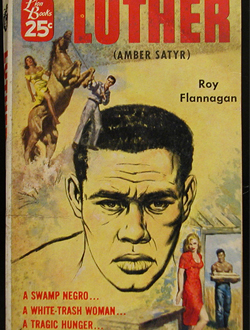
The civil rights move of the 1950s and 1960s forced many white Americans to examine their images of and beliefs about blacks. Television set and newspaper coverage showing black protesters, including children, beingness beaten, arrested, and jailed by baton-waving constabulary officers led many whites to encounter blacks as victims, not victimizers. The fauna caricature did non die, merely it lost much of its credibility. Not surprisingly, lynchings, specially public well-attended ones, decreased in number. Lynchings became "detest crimes," committed secretly. Beginning in the 1960s the relatively few blacks who were lynched were not accused of sexual assaults; instead, these lynchings were reactions of white supremacists to black economic and social progress.
The brute caricature has not been every bit common every bit the Coon caricature in American movies. The Nativity of a Nation (Griffiths, 1915) was the first major American movie to portray all the major anti-black caricatures, including the creature. That movie led to numerous black protests and white-initiated race riots. Ane result of the racial strife was that black male actors in the 1920s through 1940s establish themselves limited to Coon and Tom roles. Information technology was neither socially adequate nor economically assisting to show movies where black brutes terrorized whites.
In the 1960s and 1970s "Blaxploitation" movies brought aggressive, anti-white black males onto the big screen. Some of these fit the "Buck" caricature -- for example, the private detective in Shaft (Freeman & Parks, 1971) and the pimp in Superfly (Shore & Parks, 1972) -- but some of the Blaxploitation actors were cinematic brutes, for example Melvin Van Peebles' character in Sweet Sweetback'due south Baadasssss Vocal (Gross, Van Peebles & Van Peebles, 1971). Sweetback, the main character, is falsely accused of a crime. On the lam he assaults several men, rapes a black woman, and kills decadent law officers. The movie ends with the message: A BAADASSSSS NIGGER IS COMING Dorsum TO COLLECT SOME Ante. That frightened whites. Immature blacks, tired of the Stepin Fetchit portrayals, flocked to see the low-budget pic. Although dressed in the clothes of a insubordinate, Sweetback was as much a animate being as had been the lustful Gus in The Nativity of a Nation.
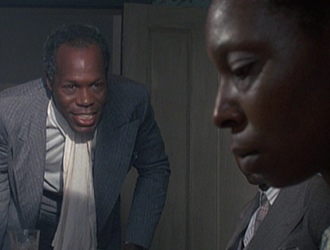
American Gigolo (Bruckheimer & Schrader, 1980) had a poisonous and despicable blackness pimp. He was one of the many black sadistic pimps who have abused and degraded whites in American movies. Mister---, the husband in The Color Purple (Jones, Kennedy, Marshall, Spielberg & Spielberg, 1985), is an angry and savage wife abuser, and so is Ike Turner in What's Love Got To Do With It? (Chapin, Krost & Gibson, 1993). Both are brutes whose victims happen to exist black. Turner's real life criminal behavior (which predated the movie) was used to give credibility to his character's portrayal as a animal and, more importantly, to reinforce the belief that blacks are especially decumbent to brutish behavior.
In the 1980s and 1990s the typical cinema and television brute was nameless and sometimes faceless; he sprang from a hiding identify, he robbed, raped, and murdered. He represented the cold brutality of urban life. Often he was a gangbanger. Sometimes he was a dope fiend. Actors who played the black brute were commonly non on screen very long, only long enough to terrorize innocent victims. They were movie props. On television shows similar Law and Order, Homicide: Life on the Streets, ER, and NYPD Blue, nameless blackness brutes set on, maim, and impale. On October 2, 2000, NBC debuted Deadline, a drama involving an irascible journalism teacher. In the first episode 2 young blackness males brutally kill v restaurant workers. They kill without remorse.
The recent depiction of black males every bit brutes is not express to television dramas. Mike Tyson, the sometime heavyweight boxing champion, has embraced the brute image. Tyson was marketed as a sadistic and savage warrior who was capable of killing an opponent. His quick knockouts bolstered his reputation every bit the world'due south most feared man. Joyce Carol Oates wrote, "Tyson suggests a savagery merely symbolically contained within the brightly illuminated ring" (Souther, northward.d.). She wrote this a decade earlier Tyson was convicted of several criminal charges, including the rape of a beauty pageant contestant, and later, the battering of two motorists. After his boxing skills had macerated, Tyson gained greater notoriety by biting the ear of an opponent during a tour. In a news briefing Tyson said, "I am an animate being. I am a bedevilled rapist, a hell-raiser, a loving father, a semi-good husband." Referring to Lennox Lewis, the heavyweight boxing champion, Tyson said, "If he ever tries to intimidate me, I'm gonna put a fu--ing bullet through his fu--ing skull" (Serjeant, 2000). Tyson benefited from the brute image. His boxing matches were "events." Spectators paid thousands of dollars for ringside seats. Tyson became the wealthiest and all-time known athlete on earth. In his mind, he was a twenty-first century gladiator; to the American public, he was simply a black brute.

Tyson is a violent and emotionally unstable man, but he is more than a ane-dimensional brute. He has donated thousands of dollars to civic, educational, and humanitarian organizations. Without media fanfare, he has visited hundreds of hospitalized patients, specially seriously ill and injured children. He is smarter than his public paradigm, and has worked diligently to "deepen" his intellect. Even so, he was marketed, with his permission, equally a crude vicious. Americans see him as an affirmation of the black beast extravaganza, and he has, especially in recent years, embraced the stereotype outside the boxing ring. Tyson tin no longer distinguish the (Iron Mike) myth from the (brutal criminal) madness, and many white Americans cannot separate Tyson's criminal behavior from his blackness.
During the 1988 presidential campaign, George Bush-league'due south ballot commission sought to portray his opponent, Michael Dukakis, as weak on crime. Bush's team used television receiver advertisements which showed a menacing mug shot of Willie Horton, a blackness convicted murderer. Horton, while out of prison on an unguarded 48-hour furlough, kidnapped a young white suburban couple. He repeatedly stabbed the man and raped the woman several times. The prototype of Horton's threatening face on the nation's television screens helped Bush win the election. It also reinforced the conventionalities that a black brute is worse than a white brute.
My wife's been shot. I'm shot.... He made u.s. become to an abased area. I don't see any signs. Oh, God!
This frantic phone call came into the Massachusetts Land Constabulary on the night of October 23, 1989. After a desperate search, using only the sound from the open up prison cell telephone every bit their guide, law discovered an injured couple. Carol DiMaiti Stuart, vii months pregnant, had been shot in the head; Charles, her husband, had a serious gunshot wound to the belly. Hours later, doctors performed a Cesarean section on the dying woman and delivered a premature infant boy who died days later. Charles Stuart told the police that the murderer was a black man.
The city of Boston, which has a history of racial discord, experienced heightened racial tensions every bit police searched for the blackness brute. Officers went into blackness neighborhoods and rounded upwards hundreds of black men for questioning. The blackness community was outraged. Charles Stuart picked Willie Bennett out of a lineup; Bennett was subsequently arrested for the offense (Ogletree, n.d.).
Afterwards, constabulary were informed by Stuart's blood brother that Charles Stuart probably killed his married woman for insurance money. The law began investigating Charles Stuart and were building a potent coexisting case when, on January 4, 1990, he committed suicide.
In 1994 Susan Smith, a young mother in Marriage, Southward Carolina, claimed that a man had commandeered her automobile with her two boys: 14-calendar month-old Alex and 3-year-old Michael. She described the carjacker equally a "blackness male in his late 20s to early 30s, wearing a plaid shirt, jeans, and a toboggan-type chapeau." A blended of her description was published in newspapers, nationally and locally. Smith appeared on national telly, tearfully begging for her sons to be returned safely. An entire nation wept with her, and the paradigm of the black brute resurfaced. The Reverend Mark Long, the pastor of the church where Smith's family unit attended services, said in reference to the black doubtable, "There are some people that would like to run across this homo's brains bashed in" (Squires, 1994).
After 9 days of a gut-wrenching search and strained relations between local blacks and whites, there was finally a intermission in the example: Susan Smith confessed to drowning her ain sons. In a 2-folio handwritten confession she apologized to her sons, simply she did not apologize to blacks, nationally or locally. "It was hard to exist black this week in Union," said Hester Booker, a local black human being. "The whites acted so unlike. They wouldn't speak (to blacks); they'd look at you and and then achieve over and lock their doors. And all because that lady lied" (Fields, 1994).
The false allegations of Charles Stuart and Susan Smith could take led to racial violence. In 1908, in Springfield, Illinois, Mabel Hallam, a white woman, falsely accused "a black fiend," George Richardson, of raping her. Her accusations angered local whites. They formed a mob, killed two blacks chosen randomly, then burned and pillaged the local black customs. Blacks fled to avert a mass lynching. Hallam later admitted that she lied about the rape to cover upward an extramarital affair.
How many lynchings and race riots have resulted from false accusations of rape and murder leveled against and so-called black brutes?
© Dr. David Pilgrim, Professor of Sociology
Ferris State University
Nov., 2000
Edited 2012
1 The tragic mulatto caricature was sometimes treated as an adult; albeit, a troubled, white-identified, self-loathing adult.
References
Breckinridge, C. R. (1900). Speech of the Honorable Clifton R. Breckinridge: In Southern Guild for the Promotion of the Study of Race Conditions and Problems in the South, Race Problems of the S: Study of the proceedings of the offset almanac conference held under the auspices of the Southern Order for the Promotion of the Study of Race Conditions and Problems in the South, at Montgomery, Alabama, May eight, 9, ten, A.D. 1900. Richmond, VA: B. F. Johnson Pub. Co.
Bruckheimer, J. (Producer), & Schrader, P. (Manager). (1980). American gigolo [Motility moving-picture show]. United States: Paramount Pictures.
Carroll, C. (1900). "The Negro a beast"; or, "In the prototype of God". St. Louis, MO: American Book and Bible Business firm.
Chapin, D., & Krost, B. (Producers), & Gibson, B. (Director). (1993). What'due south honey got to do with it [Flick]. United States: Touchstone Pictures.
Dixon, T. (1905). The clansman: an historical romance of the Ku Klux Klan. New York, NY: Grosset & Dunlap.
Dixon, T. (1902). The leopard'southward spots; a romance of the white man's burden - 1865-1900. New York, NY: Grosset & Dunlap.
Fields, R. (1994, November 4). Blackness residents hurt, angered. The Herald-Periodical (Spartenberg Due south.C.). Retrieved from http://jclass.umd.edu/archive/newshoax/casestudies/criminal offense/CrimeSmith1104c.html.
Fredrickson, G. M. (1971). The blackness image in the white mind: The debate on Afro-American character and destiny, 1817-1914. New York, NY: Harper & Row.
Freeman, J. (Producer), & Parks, G. (Director). (1971). Shaft [Motion pic]. Usa: Metro-Goldwyn-Mayer.
Gibson, R.A. (northward.d.).The Negro holocaust: Lynching and race riots in the United states, 1890-1950. New Haven, CT: Yale-New Haven Teachers Constitute. Retrieved from http://www.yale.edu/ynhti/curriculum/units/1979/2/79.02.04.x.html.
Griffith, D. W. (Producer/Director). (1915). The nascency of a nation [Motion moving picture]. Usa: David W. Griffith Corp.
Grimshaw, A. D. (Ed.) (1969). Racial violence in the United States. Chicago, IL: Aldine Pub. Co.
Gross, J., & Van Peebles, M. (Producers), & Van Peebles, One thousand. (Manager). (1971). Sweetness Sweetback'southward baadasssss song [Motion movie]. U.s.: Yep.
Holden-Smith, B. (1996). Lynching, federalism, and the intersection of race and gender in the Progressive era. Yale Periodical of Law and Feminism. Retrieved from http://library2.lawschool.cornell.edu/hein/Holden-Smith,%20Barbara%208%20Yale%20J.L.%20&%20Feminism%2031%201996.pdf.
Jones, Q., Kennedy, Grand., Marshall, F., & Spielberg, S. (Producers), & Spielberg, S. (Director).The color purple [Motion moving-picture show]. U.s.: Warner Bros. Pictures.
Myrdal, G. (1944). An American dilemma: the Negro problem and mod republic. New York, NY: Harper.
Ogletree, C. (due north.d.) The Basic Black Forum with Charles Ogletree.
Page, T. Due north. (1898). Ruddy Stone: A chronicle of Reconstruction. New York, NY: Charles Scribner'southward Sons.
Page, T. N. (1904). The Negro: The southerner's problem. New York, NY: C. Scribner's Sons.
Shore, S. (Producer), & Parks, G. Jr. (Director). (1972). Superfly. United States: Warner Bros. Pictures.
Smith, C.H. (1893). Have Negroes besides much liberty? Forum, Xvi.
Souther, R. (n.d.). Celestial timepiece - The Joyce Ballad Oates home folio. Retrieved from http://www.usfca.edu/jco/.
Squires, C., & Greer, Jr., R. (1994, October 30). Frustration mounts in search. The Herald-Periodical (Spartenberg S.C.). Retrieved from http://jclass.umd.edu/archive/newshoax/casestudies/crime/CrimeSmith1030a.html.
Winston, G.T. (1901). The relations of the whites to the Negroes. Annals of the American Academy of Political and Social Science, XVII.
Source: https://www.ferris.edu/HTMLS/news/jimcrow/brute/homepage.htm
0 Response to "Whites and Black Children Cartoon Try Try Again"
Postar um comentário